
Navigating the Future of Healthcare: Seamless Medtech Software for Evolving Clinical Realities
The healthcare sector is undergoing a profound transformation, demanding sophisticated yet intuitive medtech software solutions. This article explores how specialized software engineering builds dependable, workflow-driven platforms that enhance efficiency, improve patient outcomes, and integrate seamlessly into comple
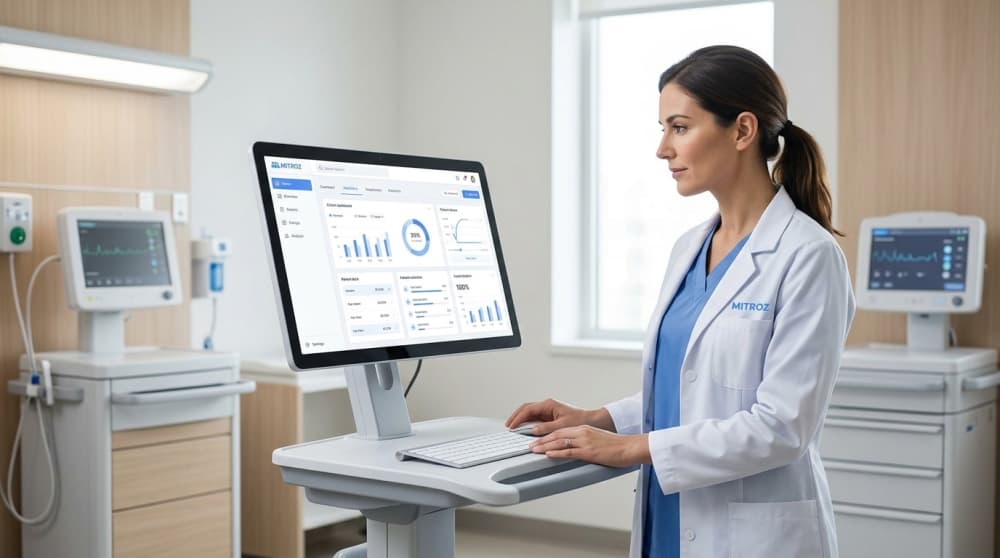
The healthcare sector is undergoing a profound transformation. From the increasing adoption of connected medical devices to the growing reliance on real-time data for patient care, technology is reshaping every facet of clinical operations and patient engagement. This evolution presents both immense opportunities and significant challenges, particularly in balancing advanced functionality with the imperative for user-friendly, reliable software that fits seamlessly into existing, often high-stakes, medical workflows.
In this dynamic environment, the demand for sophisticated yet intuitive medtech software has never been higher. Healthcare organizations, medical device manufacturers, and clinical teams need solutions that not only perform critical functions but also enhance efficiency, improve patient outcomes, and reduce the operational burden on staff. This is where specialized software engineering becomes indispensable, crafting dependable, workflow-driven platforms that bridge the gap between complex technology and practical clinical application.
The Accelerating Currents of Healthcare Technology
Several key trends are driving the rapid technological advancement in healthcare, each demanding robust and intelligent software foundations:
Connected Health and the IoT Revolution
Medical devices are no longer isolated instruments. They are increasingly connected, forming networks that capture and share vast amounts of patient data. From remote monitoring devices tracking vital signs to integrated operating room equipment, the Internet of Medical Things (IoMT) promises unprecedented insights and proactive care. However, harnessing this data requires software capable of secure, real-time integration, analysis, and presentation. The challenge is not just collecting the data but making it actionable and accessible within a clinician's workflow.
Data-Driven Decision Making and AI Augmentation
The sheer volume of healthcare data – from electronic health records (EHRs) to genomic sequences and imaging scans – offers immense potential for improving diagnostics, personalizing treatment plans, and optimizing hospital operations. Artificial intelligence and machine learning are increasingly critical for sifting through this data, identifying patterns, and providing clinical decision support. Effective integration of AI tools into clinical workflows necessitates carefully engineered software that ensures data integrity, interpretability, and ethical application.
Expanding Reach Through Telemedicine and Remote Care
The past few years have underscored the critical role of telemedicine and remote patient monitoring in expanding access to care, especially for underserved populations or during public health crises. These models rely heavily on robust, secure, and intuitive digital platforms that facilitate virtual consultations, remote diagnostics, and continuous patient engagement. The underlying software must be dependable, scalable, and easy for both patients and providers to navigate.
Operational Efficiency: Streamlining Clinical and Administrative Workflows
Healthcare organizations are perpetually seeking ways to enhance efficiency, reduce costs, and alleviate administrative burdens on clinicians. Software solutions that automate routine tasks, streamline patient scheduling, manage resource allocation, and simplify regulatory compliance are invaluable. The goal is to free up clinical staff to focus on direct patient care, rather than grappling with complex or disjointed digital systems.
Beyond Technical Complexity: Engineering for Intuitive Medtech Workflows
The term "easy to use" in the context of medtech software carries a very specific meaning. It isn't about oversimplifying complex medical processes; rather, it’s about designing systems that are so thoughtfully integrated into existing clinical workflows that they feel natural and intuitive. This requires a deep understanding of the end-user's environment, challenges, and cognitive load.
Consider a surgeon in an operating room or a nurse managing multiple patients. Their attention is paramount. Software must support, not distract. This means:
- Seamless Data Flow: Instead of manually inputting patient vitals from a connected device, a clinician should see them automatically updated in the EHR, with clear visual indicators of changes. This reduces transcription errors and saves precious time.
- Contextual Information Delivery: Presenting the right information at the right time, whether it's an alert about a patient's deteriorating condition or the latest dosage recommendations based on real-time data. The software acts as an intelligent assistant, not just a data repository.
- Streamlined User Interfaces: While medical software often requires displaying dense information, well-engineered solutions use intuitive layouts, clear iconography, and logical navigation paths. This reduces the learning curve and minimizes the potential for errors under pressure.
- Interoperability as a Foundation: Standards like HL7 and DICOM are not just technical specifications; they are the bedrock of practical usability. Software that flawlessly adheres to these standards ensures that data moves reliably between disparate systems – from lab results to imaging archives – eliminating manual reconciliation and fostering a holistic view of the patient. This isn't just about data exchange; it's about reducing friction in critical care pathways.
- Built-in Regulatory Guardrails: For medical software, ease of use also means confidence in compliance. Solutions that embed regulatory requirements (e.g., FDA, CE marking) into their design, providing automated audit trails and secure data handling, simplify a complex operational burden.
Mitroz's Approach: Dependable Software, Designed for People
At Mitroz, we specialize in building the kind of dependable, workflow-driven software that defines the future of medtech. Since 2013, our focus has been on complex enterprise platforms, healthcare IoT, and medical devices where reliability and engineering depth are paramount. Our methodology centers on understanding the intricate real-world operations of healthcare, then designing and developing software that precisely meets those needs with an emphasis on practical usability.
Custom Medtech Software Engineering
We engineer custom software for connected medical devices, ensuring they not only perform their core function but also integrate seamlessly into clinical ecosystems. This includes developing firmware, device management platforms, and applications that handle sensitive patient data with precision and security. The goal is to make advanced devices easier to deploy, monitor, and maintain.
Streamlining Clinical Workflows
Our solutions for clinical operations focus on optimizing efficiency. This could involve developing intuitive patient management systems that simplify scheduling and record-keeping, or creating platforms that automate routine administrative tasks, allowing medical professionals to dedicate more time to direct patient care. The emphasis is on building interfaces that mirror how clinicians actually work, reducing training time and increasing adoption.
Healthcare IoT and Data Integration
From wearables that monitor chronic conditions to hospital-wide sensor networks, we build the backend systems and front-end dashboards that make healthcare IoT actionable. This involves sophisticated data engineering to process, secure, and present information in a meaningful way, often leveraging AI to highlight critical trends or anomalies. Our expertise in standards like HL7 and DICOM ensures that these systems communicate effectively across the entire healthcare IT landscape, removing data silos that hinder efficient care.
Modernizing Legacy Systems
Many healthcare organizations grapple with outdated software that is cumbersome and inefficient. We specialize in modernizing these legacy platforms, transforming them into agile, user-friendly, and connected systems. This not only improves functionality but also enhances the overall experience for clinical staff, making their daily tasks smoother and less frustrating.
The Engineering Behind Usability
Achieving "ease of use" in critical healthcare applications isn't a superficial design choice; it's a deep engineering challenge. It requires:
- Profound Domain Knowledge: Understanding clinical practices, patient safety protocols, and regulatory requirements.
- User-Centric Design: Collaborating closely with clinicians and administrators throughout the development process.
- Robust Architecture: Building highly stable, secure, and scalable foundations that can handle the demands of continuous operation and sensitive data.
- Meticulous Testing and QA: Ensuring every function, every integration point, performs flawlessly under real-world conditions.
The Tangible Benefits of Well-Engineered Medtech Software
The strategic investment in reliable, workflow-driven medtech software yields concrete advantages:
- Improved Patient Safety and Outcomes: By reducing errors, providing timely information, and enabling proactive care.
- Enhanced Clinical Efficiency: Freeing up valuable time for direct patient interaction and reducing staff burnout.
- Better Data for Strategic Decisions: Empowering organizations with insights for operational improvements and personalized medicine.
- Accelerated Innovation: Enabling faster adoption of new technologies and methodologies within the clinical setting.
- Stronger Regulatory Compliance: Building systems that inherently support and simplify adherence to complex medical regulations.
Partnering for a Healthier Future
The future of healthcare is undeniably digital, connected, and intelligent. Navigating this future successfully requires not just technology, but the right technology partner. Mitroz is dedicated to being that partner, delivering the robust, workflow-driven medtech software engineering that enables healthcare providers and innovators to thrive. We build systems that are not only powerful and dependable but also inherently intuitive, making the complex work of healthcare easier, safer, and more effective.
If your organization is looking to build or modernize critical healthcare software, from connected devices to enterprise clinical platforms, explore how specialized engineering can make a difference.